
First-onset tinnitus: Know when to take action and when to stay calm
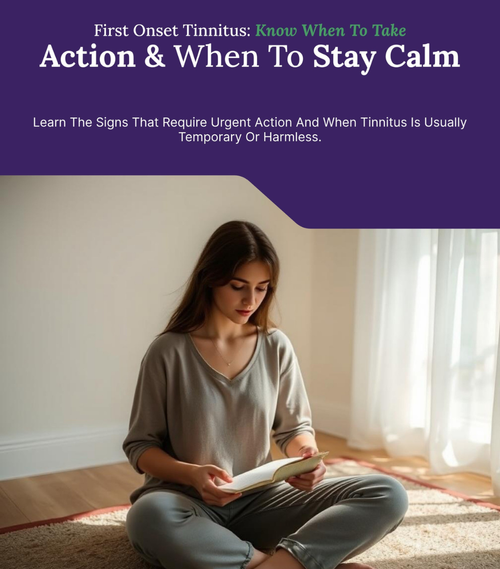
Waking up to a sudden ringing, buzzing, or hissing in your ears can be frightening. In an instant your quiet world is disrupted — and it's completely normal to feel an immediate wave of distress or anxiety.
As a tinnitus specialist, the very first thing I want to tell you is this: take a deep breath. Here is what you need to know.
When tinnitus first appears, it can feel like an alarm you can't switch off. But there's a big difference between acute tinnitus (how it starts) and chronic tinnitus (how it stays). Here's what you need to know right now to protect your peace of mind and your hearing health.
1. Step One: Book a Hearing Test — Even If You're Not Worried
Before anything else, this is the one step I'd encourage every new-onset tinnitus patient to take: book a diagnostic hearing test. Not because something is necessarily wrong, but because in the majority of cases, tinnitus and hearing loss are linked — even when the hearing loss itself hasn't been noticed yet.
A large population study of older adults (the Rotterdam Study, published in Otology & Neurotology) found that people with measurable hearing impairment were more than twice as likely to experience tinnitus as those with normal hearing. Separately, a peer-reviewed review in Medical Clinics of North America describes hearing loss as one of the most consistent and well-established drivers of tinnitus, present in the large majority of people who report it. Even in patients who aren't aware of any hearing change, formal testing regularly uncovers loss that wasn't obvious day-to-day — hearing tends to decline gradually, and the brain is very good at compensating quietly in the background.
This is why a hearing test is worth doing regardless of how mild or fleeting your tinnitus feels, and regardless of whether any of the red-flag symptoms below apply to you. It gives us a clear picture of what's actually happening in your auditory system, identifies whether hearing loss is a contributing factor, and — importantly — gives you a baseline to compare against if anything changes in future.
2. The Good News: It Eases Off for Most People
Your brain is remarkably adaptable. When a new sound appears, it naturally treats it as a threat, which is exactly what sharpens your awareness of it. In the vast majority of cases, however, new-onset tinnitus settles down on its own.
This happens through a process called habituation, where the brain gradually learns to file the sound away as unimportant background noise — much the same way you stop noticing the hum of a fridge or the feeling of clothing on your skin. Clinical guidance from Johns Hopkins Medicine describes this adjustment process: there's no instant switch to flick, but the auditory system does settle over time, and the sound becomes markedly less intrusive.
Peer-reviewed literature on tinnitus management points the same way — early reassurance and simple lifestyle adjustments, such as avoiding total silence, meaningfully support the auditory system through this acute settling-in phase.
3. Calming Your Nervous System Right Now
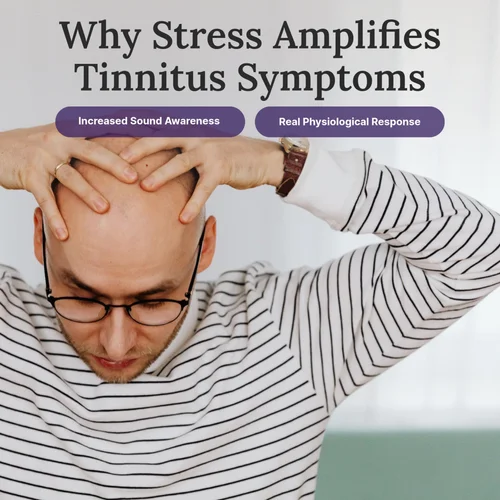
If the ringing is keeping you up or causing distress tonight, don't sit in a dead-silent room — silence tends to make tinnitus feel louder by contrast. A few things that genuinely help, consistent with guidance from Harvard Health Publishing:
Add low-level background sound. A bedside fan, a humidifier, or a soft nature-sound app all work. The aim isn't to drown the tinnitus out completely — it's to give your brain something else to blend it into.
Ease off stimulants. Cut back on caffeine and alcohol for now — both can heighten your circulatory response and make you more sensitive to the sound.
Protect your ears, but don't overprotect them. Steer clear of genuinely loud environments, but there's no need for earplugs during ordinary daily life. Overprotecting can actually push your brain to turn its internal "volume" up, making tinnitus feel more prominent, not less.
4. The Red Flags: When to See an Audiologist That Day

Most tinnitus is benign and temporary — but a few warning signs mean you shouldn't wait it out.
The rule of thumb: if new tinnitus arrives alongside vertigo (dizziness) or any sudden change in your hearing, you need a diagnostic hearing assessment that same day.
Sudden muffled or blocked hearing in one ear
If one ear suddenly feels blocked or noticeably duller alongside new tinnitus, this can indicate Sudden Sensorineural Hearing Loss — considered a medical emergency. Guidance from the UK's National Institute for Health and Care Excellence (NICE) is clear that sudden hearing loss occurring within three days, paired with tinnitus, needs medical evaluation within 24 hours. Acting early opens the door to treatments, such as steroid therapy, that can genuinely restore hearing.
Dizziness or a spinning sensation
If the room feels like it's spinning or you're unsteady on your feet alongside the new sound, this points to the balance and hearing nerve pathways in your inner ear being involved together. The Mayo Clinic notes that tinnitus paired with vertigo warrants prompt investigation to rule out specific vestibular conditions.
Quick Checklist
Any new tinnitus, however mild? Book a hearing test — hearing loss is a leading contributor in most cases, even when it isn't obvious yet.
Just ringing, nothing else? Reassure yourself, use background sound to help you sleep, and give it time — it's highly likely to ease.
Ringing plus sudden muffled or reduced hearing? Book a diagnostic hearing assessment today.
Ringing plus spinning dizziness? Seek medical evaluation without delay.
If you're ever in doubt, the safest first step is a comprehensive assessment with a clinical audiologist — someone who can test your auditory pathways properly, reassure your nervous system with real answers, and give your brain the tools it needs to file that ringing back where it belongs: in the background.
Not sure if what you're experiencing needs a same-day check?
As Adelaide's dedicated tinnitus specialist, I can help you tell the difference between "give it time" and "get seen today" — and take it from there together.
Book an Assessment Adelaide Tinnitus & Hearing Care · Goodwood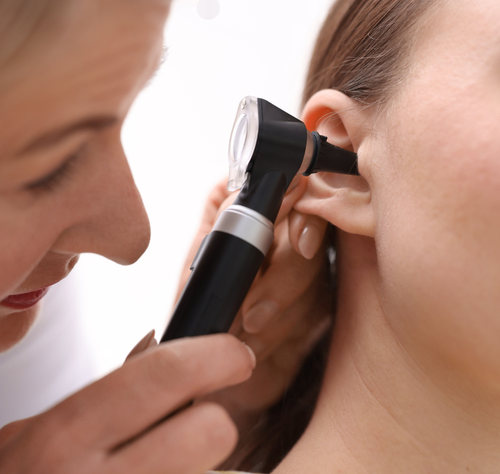
References: Shapiro et al., Medical Clinics of North America (2021) · The Rotterdam Study, Otology & Neurotology · Johns Hopkins Medicine · Harvard Health Publishing · National Institute for Health and Care Excellence (NICE) · Mayo Clinic
