
Lenire Tinnitus Treatment
Two forms of stimulation.
One personalised tinnitus treatment.
Lenire combines sound with gentle stimulation of the tongue — an approach known as bimodal neuromodulation.
Lenire is a clinically researched tinnitus treatment for adults with chronic subjective tinnitus.
At Adelaide Tinnitus and Hearing Care, we first assess your tinnitus, hearing, sound tolerance and the factors that may be contributing to, exacerbating or maintaining your symptoms.
If Lenire is appropriate for you, it can then form part of your individual tinnitus management plan.

Sound + tongue stimulation,
working together.
Lenire uses bimodal neuromodulation. “Bimodal” simply means that two different forms of stimulation are delivered at the same time.
During treatment, specially configured sounds are delivered through headphones while a small device called the Tonguetip® provides mild electrical stimulation to the surface of the tongue.
The two forms of stimulation are paired as part of a clinician-guided tinnitus treatment designed to influence the neural networks involved in tinnitus and reduce the impact tinnitus has on everyday life.
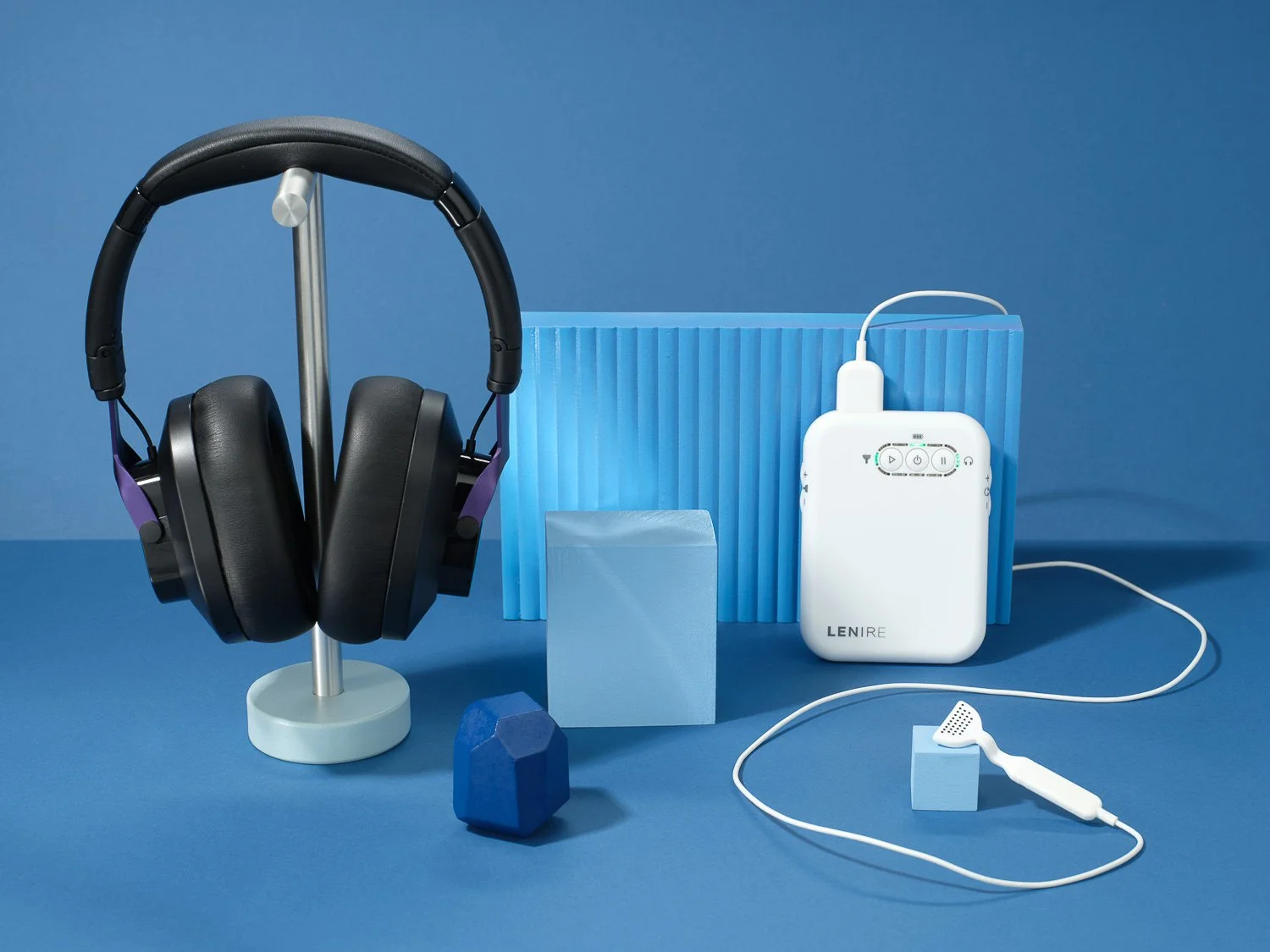
stimulation
stimulation
Lenire is different from masking.
The idea is not simply to cover up the tinnitus with another sound.
Sound can be used in many different ways in tinnitus care. Sometimes it is used to reduce contrast with tinnitus or provide background sound. Lenire takes a different approach.
Its auditory and tongue stimulation are delivered together as a neuromodulation treatment. Clinical research has investigated whether this paired stimulation can reduce tinnitus severity and the impact tinnitus has on a person's life.
The goal is not necessarily to eliminate the tinnitus signal completely.
The goal is for tinnitus to become less intrusive and to occupy less space in everyday life.
Lenire is backed by clinical research.
Lenire has been investigated across multiple clinical studies of bimodal neuromodulation, including the TENT-A1, TENT-A2 and TENT-A3 studies, as well as subsequent real-world clinical data.
Research outcomes for groups of participants cannot predict exactly how one individual will respond. This is why appropriate assessment, treatment selection and realistic expectations matter.
What does that mean for you? Lenire is a legitimate tinnitus treatment supported by clinical research — but it is not a guarantee. Some people experience substantial improvement, some experience more modest change, and some do not respond.
Most of the treatment happens at home.
Comprehensive assessment
We assess your tinnitus, hearing, sound tolerance and relevant clinical history to determine what approach is right for you.
Lenire fitting
If Lenire is suitable, your device is configured and you are shown how to use the headphones, controller and Tonguetip®.
Treatment at home
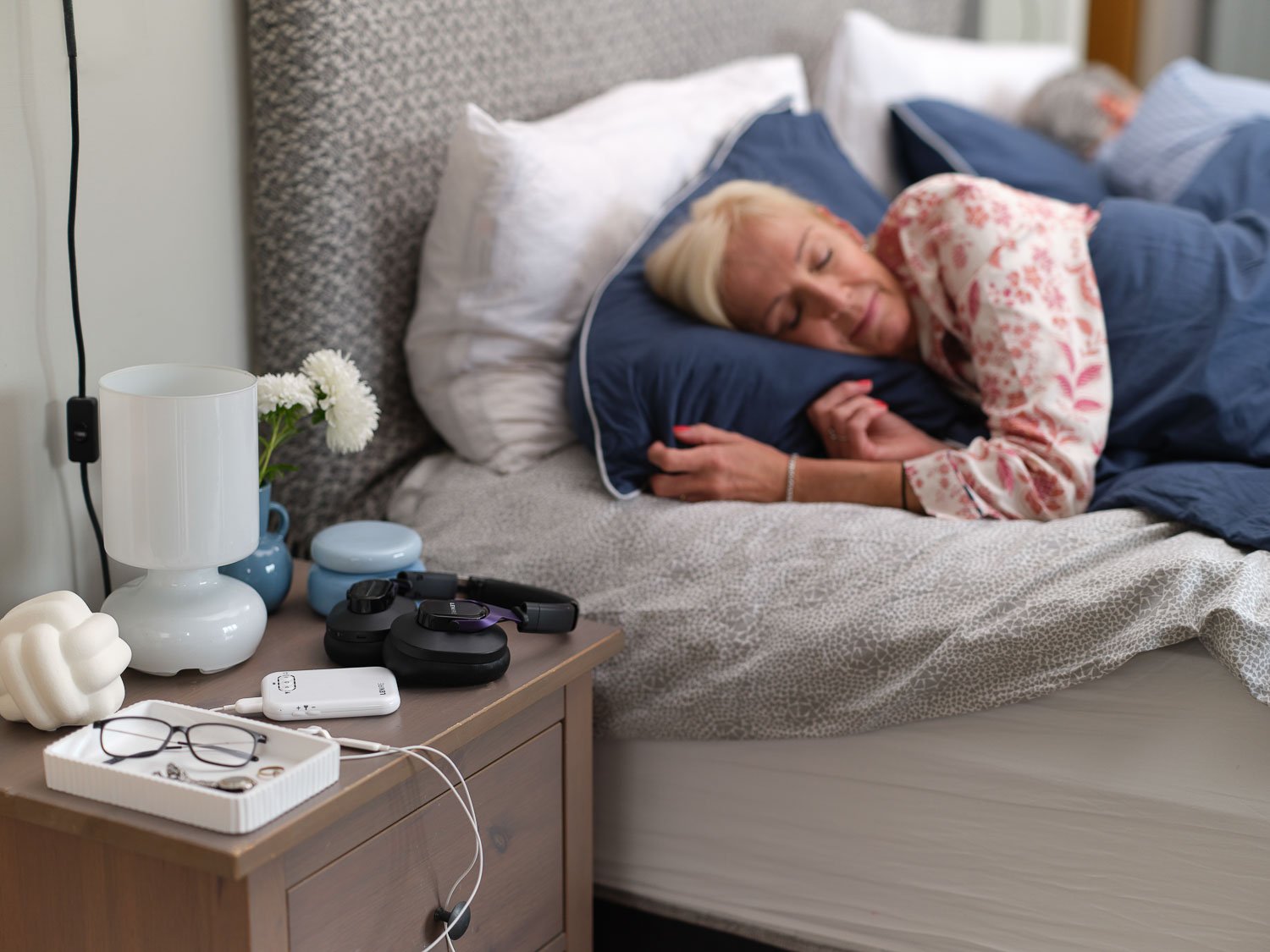
Lenire is typically used for two 30-minute sessions each day. Consistency is an important part of the treatment program.
Review and adjustment
Your progress is reviewed during treatment and settings can be adjusted where appropriate.

Eligibility for Lenire and needing Lenire are not quite the same thing.
- Your tinnitus has persisted for several months.
- Your tinnitus remains intrusive or bothersome.
- It affects concentration, relaxation, sleep or everyday quality of life.
- You can commit to regular treatment sessions at home.
- Your assessment indicates neuromodulation may be appropriate.
- Your tinnitus requires further medical investigation.
- Hearing loss is an important contributor that has not yet been addressed.
- Significant sound sensitivity needs to be prioritised.
- Another tinnitus management approach is more appropriate.
- You have a medical or other contraindication.
What comes with Lenire?
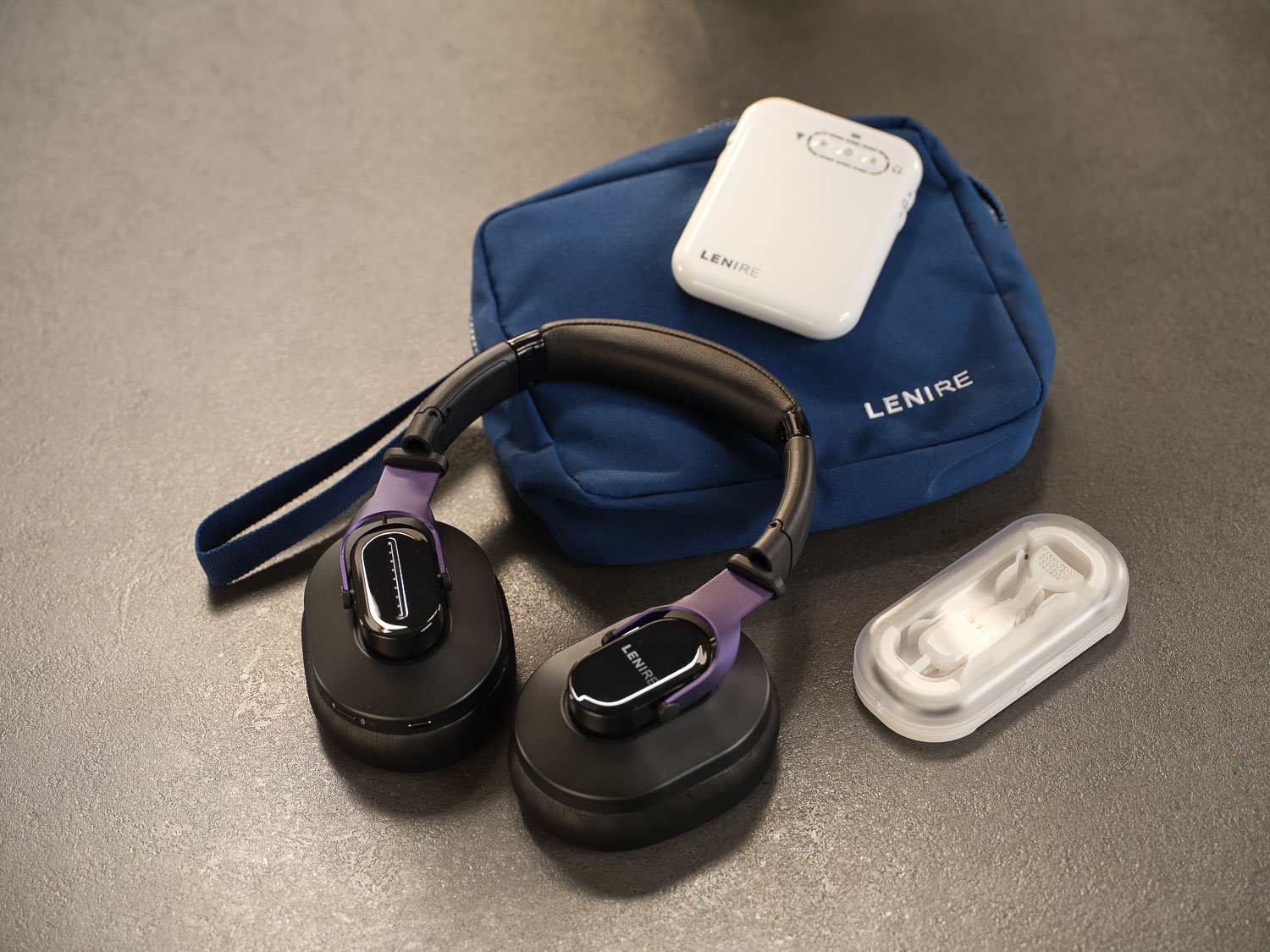
The outcome that matters is what happens in your life.
We don't judge tinnitus treatment only by whether you can still hear tinnitus in a silent room.
We are interested in whether tinnitus is becoming less intrusive, whether your attention is being drawn to it less often, whether sleep and concentration are improving, and whether you are getting back to the things tinnitus has made difficult.
The goal is not to spend your life trying to ignore tinnitus. The goal is for tinnitus to occupy less space in it.
Lenire tinnitus treatment FAQs
Is Lenire available in Australia?
Yes. Lenire is registered for use in Australia and is provided through trained healthcare professionals.
Can Lenire be used if I have hyperacusis or sound sensitivity?
Sound sensitivity does not automatically exclude Lenire. However, hyperacusis should be assessed because it may influence the order and structure of tinnitus management.
Is Lenire a cure for tinnitus?
No current tinnitus treatment can guarantee that tinnitus will disappear completely. Lenire is intended to reduce tinnitus severity and its impact on everyday life.
Does Lenire work for everyone?
No. Clinical studies report meaningful improvement for many participants, but individual responses vary and some people do not respond.
Does the Tonguetip® hurt?
The Tonguetip® provides mild electrical stimulation. The stimulation level is configured during fitting and should feel soothing rather than painful.
Who should not use Lenire?
Lenire has medical and other contraindications. Suitability is reviewed before treatment and medical or dental clearance may be requested where appropriate.
How often do I use Lenire?
Lenire is typically prescribed for two 30-minute treatment sessions each day.
How long before I might notice a difference?
Response varies between individuals. Progress is reviewed across the treatment period rather than judged from the first few sessions.
Can I just purchase Lenire without an assessment?
Lenire is clinician-guided. At Adelaide Tinnitus and Hearing Care, we also want to determine whether Lenire is actually the most appropriate treatment for your tinnitus before recommending it.
How do I know if Lenire is right for me?
That decision begins with a comprehensive tinnitus assessment. Your tinnitus, hearing, sound tolerance, clinical history and individual priorities all help determine whether Lenire makes sense for you.
Start with your tinnitus, not the device.
If tinnitus is affecting your everyday life and you'd like to know whether Lenire may be appropriate, the first step is a comprehensive tinnitus assessment. We'll assess your tinnitus and hearing, discuss the available options and give you a realistic recommendation about whether Lenire makes sense for your individual presentation.
